

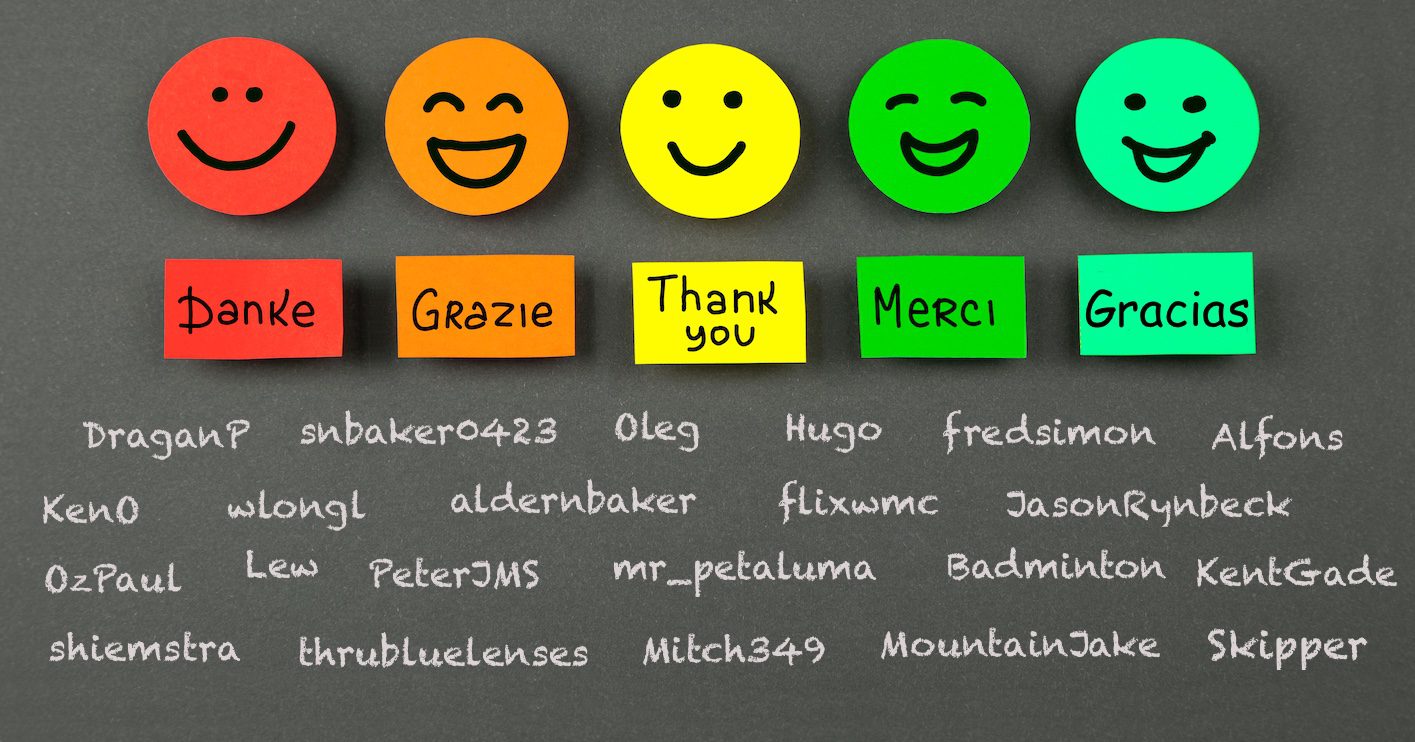
A big thank you to the following people who became mydoodads members in 2025: KentGade, Shiemstra, thrubluelenses JasonRynbeck and Mitch349.
As the Mydoodads website is really a passion project. We decided not to have adverts on this site, as we find them to be ugly and intrusive. So if you like what we are doing and would like to support us. You can either become a site member, buy us a Ko-fi or simply watch a couple of videos on our YouTube channel.
Any donations will be most welcome, as they really help us to keep the lights on, particularly in these difficult financial times.
Massive spike in RAM prices.
If you are a PC builder or someone simply looking to make your PC run a little faster. You may have noticed that the price of Random Access Memory (RAM) has massively increased in the last couple of months. With DDR5 RAM having increased in price by up to two hundred percent.
What seems to have happened, is that OpenAI signed deals to buy 40 percent of the world’s RAM from two of the three main RAM manufactures. Something that OpenAI did independently, so that neither Samsung nor SK Hynix, knew what their competitors were doing. Which meant that before the deals were signed. Neither manufacturers knew to increase RAM production, thus leading to a RAM shortage. See Sam Altman’s Dirty DRAM Deal for more info.
Then to further compound the RAM storage issue. The third major manufacture of RAM, Micron. Has declared that it will be exiting the consumer market in February 2026. Something that they claim they are doing “in order to improve supply and support for our larger, strategic customers in faster-growing segments”. In other words, they intend to also chase AI money.
While most computer manufactures currently have stockpiles of RAM. As that inventory depletes, we can expect to see the price of laptops and most electronics rise in 2026. With some predicting a rise in PC prices of 8%. So if you need to replace an old computer, it may be prudent to do it now rather than later.
UK parliament discusses age verification and the UK Online Safety Act.
While the UK online safety act was initially introduced in 2023, its impact was still being felt in 2025. Particularly when the UK government introduced age verification in the late summer. So due to a petition that had more than 550,000 signatures. On the 15th December 2025 the UK parliament was forced to debate the Repeal of the Online Safety Act.
Unfortunately, considering the number of people who signed the petition. The actual turn out from Parliamentary Members (PM’s) was very disappointing. Then to add insult to injury, the government seems to have interpreted the petition which stated:
We believe that the scope of the Online Safety act is far broader and restrictive than is necessary in a free society.
For instance, the definitions in Part 2 covers online hobby forums, which we think do not have the resource to comply with the act and so are shutting down instead.
We think that Parliament should repeal the act and work towards producing proportionate legislation rather than risking clamping down on civil society talking about trains, football, video games or even hamsters because it can’t deal with individual bad faith actors.
As meaning the general public wanted a generalised debate about the whole of the Online Safety Act. So the discussion centred around AI chatbots, the state of social media, how the Online Safety Act is more strict than the standards used by the British Board of Film Certification (BBFC), fake news, and how we protect freedom of speech. Instead of any real discussion about age verification.
Sure, there are various useful and valid elements to the Online Safety Act that needed to be reviewed. But the UK government’s position seems to be that everything that has been implemented so far is basically OK, and they just need to tweak a few things here and there.
The UK Government wants to monitor VPN traffic.
Unfortunately the problem with the internet is that it was designed to be a decentralised communication system, that is free from centralised control. So based on the UK governments current position, age verification is probably not going to work. Particularly as they appear to be treating any issue surrounding the Internet as a nail, and age verification, governmental surveillance or digital ID as being a hammer.
For example during the debate on repealing the Online Safety Act. The UK Government trotted out some vague stats that after age verification was introduced. The numbers visiting porn sites in the UK had declined. Which was a statistic, more than likely based on reports from Pornhub who said that UK visitors had dropped by 77%.
While on the surface this statistic may sound like a major victory for the Online Safety Act. There is a concern that by having the UK government openly highlighting their fight against pornography. Not only could they force it underground, but they could also make it more enticing to find. Potentially leading both children and adults, to being exposed to content on the dark web. Which would be more harmful than what is currently legally available.
However this government seems to only look at the problem directly in front of them. Which they seem to think are VPN apps. Particularly as there was a massive increase in their use since the introduction of the Online Safety Act over the Summer.
The reason VPN apps are perceived to be a problem, is that they mask your location, so you can easily bypass age verification. However VPN’s are an important security and privacy tool that everyone should be using regardless. For example whenever you use public WiFi without a VPN, your data can easily be plucked out of the air.
So in response to what the government perceive to be a new problem. There are whispers that they want to propose the introduction of age verification on the purchase of VPN apps. Something that was recently discussed in the House of Lords, and based off the transcript, seems to demonstrate that UK law makers don’t really have much of a clue about how the internet works.
For example Lord Leong said:
My Lords, online providers now have a legal duty to protect children from harmful content. As I said earlier, VPNs are here to stay, and people use VPNs for entirely legitimate purposes. It does not negate the protections which the Online Safety Act has put in place. Those duties prevent children accessing the most dangerous material online, such as pornography and content promoting self-harm or eating disorders. They also protect children from other harmful content, including bullying, abuse or material that encourages dangerous stunts or risky behaviour. The Government will hold services to account. The era of platforms turning a blind eye to the risks that children face online is over.
Sure the above statement may sound good to a politician or a parent, but it demonstrates their lack of understanding with regard to how technology and the internet actually works. So I fear that rather than solving a specific problem, they will only create more.
To give you an example, as we close out of 2025. According to Cybersecurity firm Cleafy, there has been an increase in the amount of Malware that is being passed as free VPN apps. Something that more than likely is a strategy designed to catch young people looking to bypass the Online Safety Act with a VPN client.
So the government through their desire to hammer down one nail, potentially could expose more children to having their phones compromised, which in turn could lead to more instances of blackmailed or manipulation. Which is the exact opposite of what the Online Safety Act was intended to fix.
Also reviewing Lord Leong’s statement further. We can see that the UK government is actively contradicting itself. Whereby on the one hand, they want to protect children from dangerous online material such as self harm and eating disorders. But on the other, they have already stated that they also want to bring AI into the classroom. The only problem with this, is that AI has already been shown to be harmful to children, as in some cases it was shown to be actively encouraging them to commit suicide.
Finally it’s worth mentioning again, that the internet was designed to be a decentralised communication system, that is free from centralised control. So each time a government tries to block access to specific parts of the internet. New avenues will be found to unblock that access.
So if we use pornography as an example, the more a government clamps down on the porn sites, the higher the likely hood something else will take its place. For example we might see people return to using FTP connections, or peer to peer file sharing.
However, perhaps more worryingly. The more likely scenario will be an increase in AI porn apps. As it’s already been reported by the UK Safer Internet Centre. That an app has been caught de-clothing children in a school. So I don’t envy whoever has to clean up the mess the UK government has decided to travel down. As their poorly thought through laws and policies to protect children online, don’t seem to be all that effective.
Content we will be posting in January.
In 2025 I made over 70 videos, but by mid-December I was so burnt out. I just could not face making a video on using Synology BeePhotos. So I have decided to take a small break, recharge my batteries and start posting again in February.
However 2026, should be very interesting as I want to start a new series on setting up an Asustor NAS. Also this year I would like to return to my Synology router and do a couple of new videos. Possibly looking at Bandwidth Management, DNS server, VPN and possibly Access Control.
Then while the beginners guide to setting up a Synology NAS is done. I do want to look at installing and configuring a few applications including DNS server, VPN server and maybe Proxy server. Then if there is time I would like to look at Docker, and Containers with a particular focus on Jellyfin.
Add comment